Thursday, May 27, 2010

Dust Jackets - Dust Wrappers - Dust Covers

I never know what to call them, but the term 'dust jacket ' works for me.

I recently visited a local bookshop and found that they had just purchsed a small, but well looked after, and valued collection of Percy Westerman books, all dated from the 1940's and into the early 1950's. These were obviously loved and cherished books that had been an important part of the previous owners growing up.

Dust jackets, although designed to be functional, are an iconic glimpse into the period of publication. The paper dust jackets can be so attractive. I was told by one book dealer that there are many collectors who only buy books for the cover art. It is such a shame that they are so fragile and do not easily stand the test of time. Dust jackets are often found in a poor state, torn with parts missing, or my personal favourite ' the cellotape repair'.... this stuff should be banned and withdrawn from sale or carry a government warning. Whoops! there I go again. Finding dust jackets in good condition is still exciting. Yes, "My name is Nigel and I have dust jacket envy".


The images with the cover artists/illustrators are:-
Standish Pulls it Off (1940) W Edward Wigfull
Squadron Leader (1946) Terrance T Cuneo
Golden Gleamer (1948) M Mackinlay
Sarabinda Island (1950) A Barclay
The Mystery of the Key (1948) Ellis Silas
Missing Believed Lost (1949) Will Nickless

Saturday, May 1, 2010

Percy Westerman maybe a Bad Influence on Youth

Recently, whilst researching some archived book reviews, I came across this article published in The Saturday Review dated July, 1926. I have copied it, complete with inaccuracies.


We deprecate the mania for inquiry into the tastes and thoughts of very young persons of which we have lately two illustrations. From Croydon it has been solemnly reported that the youth of the nation, so far as it is represented there, is intellectually in a bad way because the favourite author of boys is Mr P. F. Westerman and the favourite of girls is Miss Angela Brazil.

From a world-wide inquiry carried out by the Y.M.C.A. it appears that the youth of the world regards as the greatest men now living Signor Mussolini and Mr Ford, but thinks that in the British Empire there is a strong disposition to promote that eminence Buster Kearton, Douglas Fairbanks and Lou Cheney. But of what consequence is it what the average boy or girl thinks? Public opinion in the next decade, in these as in other matters, will be created, not by the boys and girls whose votes turn the scale in these plebiscites, but by a handful of young people holding quite other views. What matters is the attitude of a gifted minority, not that of the majority.
The Saturday Review
17 July 1926


Buster Kearton – should have read Buster Keaton
Lou Cheney – should have read Lon Chaney
Definition: Plebiscites – A direct vote on some question, usually of importance

It makes me think that the writer was probably ‘ an old hack’ with a very low opinion of young people, and, in an attempt to cobble together two quite unconnected pieces of information that had come his way, he was simply trying to give the reader his biased opinion.

The article was answered a little later by the Chief Librarian of Croydon Public Library – the source of the one of the two threads that generated to the initial article.


Intellectual Degeneracy

SIR – May I be allowed to say, in connexion with, your note on page 59, that it was not solemnly reported from Croydon that its youth were in a bad way because the favourite author of boys and girls were respectively, P.F. Westerman and Miss Angela Brazil. As a librarian I naturally keep watch, in the manner common to all modes of business, on the preferences of my readers. The inquiry that you mention was merely this check applied to the Junior department of the Croydon Public Libraries. The results were given, but no deduction was made from them, and certainly not the one with which you credit us.

Had I expressed any view, it would have been that Westerman is a hearty writer of health adventure yarns of the lineage of Henty and Fenn, and that Angela Brazil is at least wholesome. I wish as much could be said for the gifted young men who are producing fiction for older readers.

I am etc.,
W. C. Berwick Sayers
Chief Librarian
Croydon Public Libraries


Monday, April 19, 2010

Making Contact


I have been accused of not making contact with me easy, and hiding my email address within the text of articles in the blog. In an attempt to answer those critics here is my email address:

westermanyarns@gmail.com

Write to me, Nigel aka Blasop. I look forward to hearing from you.

Wednesday, May 13, 2009

The Curious Tale of Percy F. Westerman's Ripping Yarns

I have always been a follower of the Monty Python's Flying Circus series, and as with many other people of my generation, I can rattle off, verbatim, most of the classic sketch scripts when required... any excuse really.

Casting my mind back to Christmas 1971, among my presents, I received a copy of The Monty Python's Big Red Book (Methuen Press). It featured a spoof story titled 'Journey into Earl's Court' - A Raw Tale Of Bed-sitter Land by the Author of "Percy F. Westerman". What followed can only be described as pure Python. If you really want to read it, then follow this link. http://www.heretical.com/miscella/mpart.html

The link between Percy Westerman and the Python team appeared again, when the brilliant series 'Ripping Yarns' written by Michael Palin and Terry Jones came to the small screen. Was the inspiration for these wonderfully funny stories in anyway linked to the writer Percy F.Westerman? The booklet placed inside the DVD of Ripping Yarns explains that the idea for the first episode was prompted by a book called ‘Ripping Tales’. However, try as a might, I have been unable to trace a copy of this title, but would fascinated to know if anyone has a copy of this title that might be 'the book'.

Over the last few years there have been a number of debates with some very wise and knowledgeable people about this somewhat flimsy link, and we have discussed the connection at length, but there has not been a definite answer to the question...... until now.

The only way to settle this question was to ask the writer of Ripping Yarns, Mr Michael Palin, and here is the reply.
Thanks for your letter.

I'm afraid that as so often in Python the choice of name is completely arbitary! Percy F. Westerman was a name we were all brought up with, but his inclusion in the book was not meant to signify anything in particular. Nor was he in our minds when we started to write Ripping Yarns.

All best wishes

Michael Palin

So, there you have it. There was never a conscious decision to base any of the Ripping Yarns stories on anything by Percy F. Westerman. Still, some of the Westerman text does sound screen ready for the next series of Ripping Yarns, doesn't it?

The letter from Michael Palin appears with his kind permission.

Saturday, April 18, 2009

The Pirate Submarine - A Possible Conclusion, by James Mackenzie

This excellent and very interesting article is a first for the Westerman Yarns weblog. It has been kindly contributed for publication on this site with the kind permission of the author, James Mackenzie.

James is the author of 'Another Country: A guide to the children's books of the Lake District and Cumbria'; an absolute must for your holiday reading on your next visit to the region. James also manages the specialist weblog http://www.childrensbooksofthenorth.blogspot.com/.

Thanks James


‘I must hand her over to the new owner before the end of the present month, Gerald,’ declared Rollo Vyse, owner of the thirty-five feet motor-yacht, Ibex, to his chum Gerald Broadmayne.

This is the opening sentence of Chapter VI of ‘The Pirate Submarine’ and is 65 pages in to the storyline of this unusual story. It seems an extraordinary long time for the reader to wait for the arrival on the scene of the two characters who seem destined to be the heroes of the tale.

Yet, all in this book is not quite what it seems.

The opening chapters tell of the doings of two of the biggest villains ever to grace the pages of this author. They are Tom Trevorrick and Paul Pengelly, the rogues who are about to bring disgrace to all Cornish mariners. We see how they pass from shady business dealings just on the right side of the law to a life of outright crime. Dismantling surplus ex-Royal Naval ships in order to sell them for scrap value is not a particularly unorthodox way for former sailors to make a living. When the value of brass falls to an uneconomic level they know that they must find another way to bring in the cash. Very soon they must answer to their shareholders who will demand a dividend for their risky investments. There are also the employees who need paying.

Trevorrick’s solution to the problem is both simple and startling. They will save a doomed ship, disguise it, sneak it out on to the Channel and turn it into a modern day pirate. The whole idea seems totally preposterous. Yet such is the application of the writer to his craft that Westerman starts devising a cunning account of how they can set about their nefarious scheme. He deals with the practical details of getting the discarded submarine ready for her voyage. The location of the small shipyard is a neglected creek not far from Falmouth. The rogues have the location and the facilities to prepare their chosen vessel. The workforce have been especially selected to be rootless and without close dependents. They are invited to join a salvage expedition which will remove gold bars from a sunken vessel. Secrecy is essential if rivals are not to discover the precious wreck and steal their prize. The local Inspector is a mere cipher more intent upon drawing his pay for very little work than checking what happens to the decommissioned men of war.


Trevorrick’s command of the human factor in his plan is never in doubt. The men commit themselves to one risky but not illegal exercise and find themselves ready for something more outrageous when these plans seem to go wrong. The Naval inspector is duped and then overpowered and kidnapped when he stumbles into the wrong place at the wrong time.The disguised submarine can only make progress on the surface (no underwater engines can be operated) but it can rise and submerge on the spot. Each problem that arises is overcome by Trevorrick’s sheer nerve and inventiveness. He soon has a Cornish crew committed to piracy and even has a local smuggler to transport and handle the stolen goods. He has also adopted his nomme de guerre Captain Cain.

At page 65, by an unhappy accident ,the pirate submarine Alerte rises from the water and rescues Vyse and Broadmayne from the dinghy of their burnt out motor cruiser. At this point the pirates’ plans begin to unravel. The rest of the book recounts the adventures up to page 296 when the unlucky Alerte reaches its final resting place. You might expect that Vyse and Broadmayne find their own way of outwitting the pirate and undoing his schemes. Very soon, for example, Broadmayne manages to win the approval of some of the pirate crew by defeating their champion in improvised boxing match.

‘Tough,desperate ruffians they might be, but they were sportsmen, members of a race that produces the best winners and the best losers in the world.”

Captain Cain keeps his men in check by promising that they will never be called on to fire at an English ship. Somehow he also can’t bring himself to deal with the young heroes that may have been brutal but which would have been sensible. Somehow in return the youths feel a grudging respect for the man who has them prisoner. Later, however, they both play their part in trying to hunt him down. By the end of the book the rascally and cowardly Pengelly has gone to his fate in prison. Yet the sheer defiance and unnatural courage of Captain Cain stays with him to the end. In fact Broadmayne’s final reflections suggest something more. He ponders over what happened to Cain ?


‘It was to him a fascinating and yet unsolved mystery. Did Cain succeed in his last desperate attempt to escape ? Or did the bed of the land-locked Bahia Arenas hold the secret of the fate of the pirate submarine until the sea gives up its dead ?’

Now that I see the title ‘Captain Cain’ as Westerman’s next book for the same publisher in the following year I realise what the conclusion must be. You can’t keep a good (or a bad) man down.

James Mackenzie

Sunday, March 22, 2009

The Mystery of the Flying Submarine

This is a brief look at some of the news items, technological development’s and influences that may have effected the creation a few of the ‘Westerman’ yarns that involve submarines and airships – after all, airships really do look like flying submarines, don’t they?

If you have an opinion or an observation you would like to contribute regarding this item please email me
westermanyarns@gmail.com


The Submarines
The early 1900’s were exciting times in the development of new technological break-through’s. In 1870 the French novelist Jules Verne had captured the imagination of the public with his book ‘Twenty Thousand Leagues Under the Sea’ Over the next thirty years the real working submarines began to take shape and become viable tools of war.

Craft designed by Frederich Otto Vogel (German), Claude Goubet (French), Gustave Zede French), Josiah H.L Tuck (American) all contributed to the development of submarine development. For Britain however, one name became synonymous with the submarine – John Phillip Holland (Ireland). Holland (Pictured left) had been designing submarines in America since 1875, but it was one of his designs that was chosen and accepted by the British Navy as the first British submarine type.

Built at Barrow in Furnace, Holland 1 was launched on October 2, 1901 and was began service with the Royal Navy, Portsmouth in 1902.


Submarines, at this time were always newsworthy. In 1904 as part of a Royal Naval exercise with the First Fleet, five Holland submarines were assigned to defend Portsmouth and successfully torpedoed four warships. The same year saw the first major submarine accident when, close to the Nab Tower Lighthouse, Holland’s latest design, the A-1 was hit, whilst submerged, by the SS Berwick Castle (a passenger ship) with the tragic loss of all hands (Seven of the crew were from Portsmouth).

It is very likely that Percy would have read ‘Twenty thousand Leagues Beneath the Sea’ as he was growing up and this would have sparked his creative imagination, but during his time, working as a clerk in the Naval Dockyard these elements of technological fantasy were becoming fact. When the Holland 1 arrived in Portsmouth to be based at Fort Blockhouse, Gosport (HMS Dolphin), Percy was working in the Naval Base as a clerk. The 1904, A-1 accident off the Nab Tower was reported in the Portsmouth News, and the sad fact that seven of the crew were local men would have made this a talking point. Submariners were the astronauts of their time, and this was seen as a very risky area of development to be involved in. Only a few years later the A3 was also sunk with another loss of all hands following a collision off Bembridge, IOW with the ironically named, HMS Hazard.


The Airships
Progress in taking to the skies had been rapid since the first powered flight of a fixed wing aircraft by the Wright Brothers in 1903. Yet in 1900 the first airship had taken to the skies from a floating hanger on Lake Constance. The airship, the LZ1, designed by Count Ferdinand von Zeppelin, containing 400,000 cubic feet of potentially explosive hydrogen gas and measuring a massive 420 feet long with a 38 foot diameter, became the largest man-made object to take to the air.

In the early days of the First World War Germany launched a series of attacks from the air with their Zeppelin fleet. On the night of 25 September 1916 a Zeppelin attack on Portsmouth took place. The banks of search-lights in the Naval Base picked out the eerie shape of the Zeppelin as it delivered the towns ;first of many, aerial bombardments, as it moved slowly down the eastern side of the town , heading out to sea in the direction of the Isle of Wight. The town defences filled the air with sound of gunfire. It is not clear from my research, what the impact of the raid was, but a national report for that date, tells that on that night, a total of seven Zeppelin’s attacked British soil with 43 killed and 31 injured.

The pre titled Naval Wing of the Royal Flying Corps was formed in to the Royal Naval Air Service on 1st July 1914 where by only 198 men of all ranks were transferred under the command of Commander E A D Masterman. This was later known as the Airship Section. It was recognised that a sea-warfare advantage could be obtained with an eye in the sky, submarine spotting capability. Development of what became known as the Submarine Scout (SS) class airships. Introduced in 1915, these small craft could be launched from the deck of a ship; carry a crew of two; a wireless; have an arsenal of 160lbs of bombs; enough fuel for eight hours flying and a top speed of 50mph.

The British had been building airships since WW1 and the R-34 made the first East -West crossing of the Atlantic in 1919. The R-100 had her maiden flight on December 16, 1929. Built by a subsidiary of Vickers-Armstrong by a design team led by Barnes Wallis and assisted by Neville Shute Norway* (Senior Stress Engineer).

Percy had left Portsmouth before the Zeppelin incident of 1916, but his mother was still living in Campbel Road, Southsea just a few miles away from the centre of the raid so it would be safe to assume that he would have been concerned for her safety.


and so to finish...
In 1926 one of the famous Sexton Blake stories was titled ‘The Submarine that Sank Upwards’ published by Amalgamated Press (Author: Anon). On the Blakiania website (http://www.sextonblake.co.uk/) the story has been adapted and re-titled ‘The Case of the Flying Submarine’. How close is that to the Percy Westerman idea from the ‘The Mystery of the Flying Submarine’?


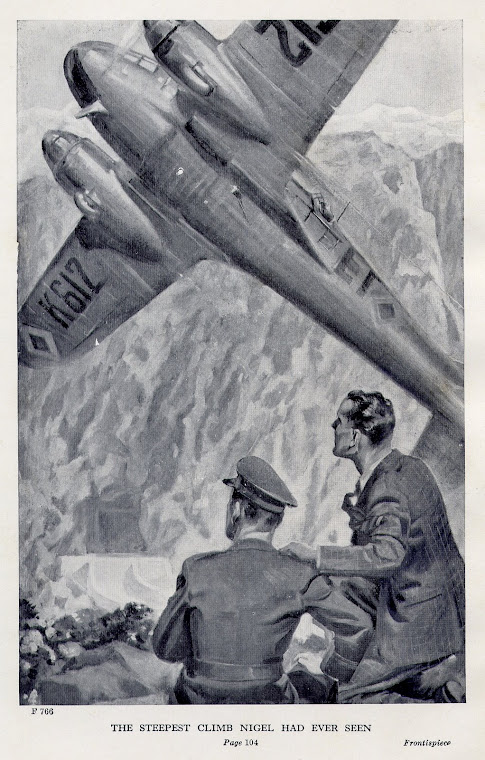
The fantasy of a vessel that can both fly and dive beneath the waves will capture the imagination of the reader, but put this into the context of the period when airships and submarines are still making the news. Strange but true, the frontpice image from 'The Mystery of the Flying Submarine' (top of the page) makes for a real stretch of the imagination, but a San Francisco based artist, Matt Hope in collaboration a China based inflatable company recently produced a one-third scale inflatable replica of a Russian submarine!!

The Books
Below is a list of books that feature submarine and airship influences – Please note that this is not a conclusive list. Please email any comments or corrections that will help in ensuring the accuracy of the list:-
‘The Flying Submarine’ (1912), Illustrator: John de Walton
‘Rival Submarines’ (1913), Illustrator: C. Fleming Williams
‘The Dreadnought of the air (1914)’, Illustrator: C. Fleming Williams
‘The Secret Battleplane’ (1916). Illustrator: Ernest Prater
‘The Submarine Hunters’ (1919), Illustrator: Edward S. Hodgson
‘A Sub and a Submarine’ (1919), Illustrator: Edward. S. Hodgson
‘The Airship “Golden Hind”’, (1920, Illustrator: C. Fleming Williams
‘The Pirate Submarine’ (1923), Illustrator Galli
‘The Black Hawk’,(1934), Illustrator: Rowland Hilder
‘The Phantom Submarine’ (1947), Illustrator: J. C. B. Knight

* In 1933 Neville Shute Norway moved his company Airspeed Ltd to the Portsmouth Airport site where he remained as Managing Director until 1938. One of his books Lanfall: A Channel Story uses Portsmouth and the region as the backdrop.


www.airships.net/
www.submarine-history.com/NOVAtwo.htm

Tuesday, March 3, 2009

Redclyffe Remember Percy Westerman


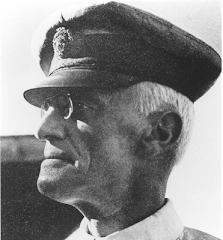
Percy Westerman was the first Commodore of the Redclyffe Yacht Club.
The original clubhouse was built by Percy with help from his son John and recently the club celebrated their diamond anniversary (75 years) and have installed a plaque commemorating their founding in 1933. The club is located in an area of outstanding natural beauty on the west bank of the River Frome at Redclyffe, near Wareham, Dorset.